


This year, being the U.S. Interstate Highway System’s 70th anniversary should be reason enough for celebration. But when you add in the benefits that this iconic road system has for Ohioans, it turns into a colossal shindig of epic proportions.
A study by The Road Information Program (TRIP) touts the benefits that traveling on the interstate has in way of safety, reliability and – yes – cost savings, as well as ailments forming on the 70-year-old transportation network.
The U.S. Interstate Highway System (IHS) is celebrating its 70th anniversary in 2026, marking seven decades since President Dwight D. Eisenhower signed the Federal-Aid Highway Act of 1956.
“More than any single action by the government since the end of the war, this one (the Interstate) will change the face of America with straightaways, cloverleaf turns, bridges and elongated parkways. Its impact on the American economy – the jobs it would produce in manufacturing and construction, the rural areas it would open-up – was beyond calculation.”
– President Dwight D. Eisenhower in 1963
Released this June, TRIP’s report, “Saving Lives, Time & Money: Maintaining the Enduring Value of America’s Greatest Infrastructure Achievement, the Interstate Highway System at 70,” provides an overall national look as well as individual states – including Ohio – on how the IHS provides “improved access,” “reduces congestion” and “annually reduces total vehicle delays,” along with the system’s rising congestion, pavement and bridge concerns.
In Ohio, the benefit of using interstates equates to savings of approximately 47.2-million hours of travel – which is fifth most of any state – and 13 million gallons of gasoline consumption – also fifth-most in the U.S. Collectively, these savings in travel time and motor–fuel consumption add up to an annual savings of nearly $2.4 billion for Ohioans – which is the seventh-most of any state.
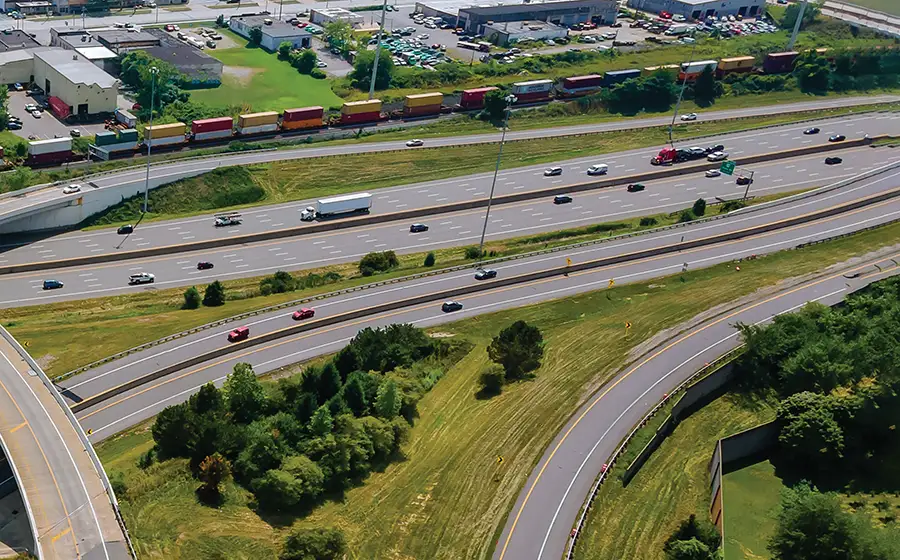
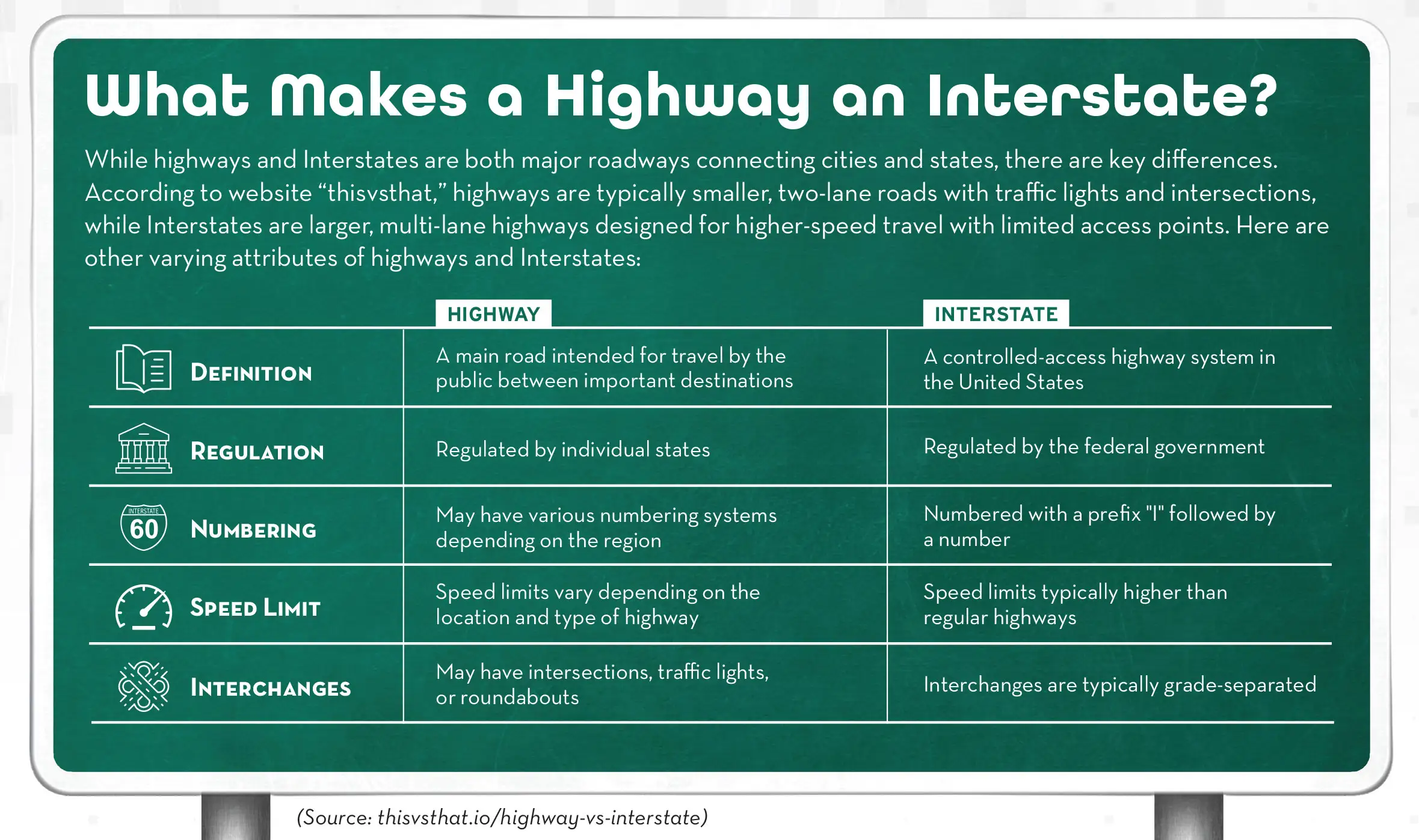
Along with savings at the gas pump, the nation’s 46,876-mile interstate system provides an estimated $65 billion annual benefit because of improved traffic safety and reduced traffic congestion. The TRIP report (tripnet.org/reports/americas-interstate-highway-system-at-70-2026) highlights:
- Travel on the nation’s Interstate highways is nearly two-and-a-half times safer than travel on all other roadways due to improved roadway safety features resulting in an annual benefit of $28 billion in reduced costs because of fewer serious/fatal traffic crashes.
- The IHS reduces traffic congestion by providing more efficient/reliable travel, which provides $37 billion annually in benefits due to reduced delays and fuel consumption.
TRIP is a national transportation research nonprofit based in Washington, D.C.
The first “interstate route” in Ohio was a 12.4-mile-long portion of I-280, which was built from 1955-1959, which today serves as a connector of I-75 to I-80/I-90 southeast of Toledo in Wood County. I-280 was originally part of the Detroit-Toledo Expressway.
Ohio’s more than 1,500 miles of interstate ranks fifth-most of any state, including Texas with 3,233 miles, California (2,456), Illinois (2,169) and Pennsylvania (1,759). Ohio’s 1,572 IHS miles includes portions of nine primary routes – I-70, I-71, I-74, I-75, I-76, I-77, I-79, I-80 and I-90 – and 13 auxiliary/spur routes – I-270, I-271, I-275, I-277, I-280, I-470, I-471, I-475, I-480, I-490, I-670, I-675 and I-680 – which as a whole provide safer travel compared to the state’s other roadways systems.
According to TRIP, as a result of the interstate system’s “built-in-safety features like median barriers, paved shoulders, a minimum of four lanes and complete separation from cross traffic and rail lines,” an estimated 263 lives were saved in Ohio in 2024.
Regarding Ohio’s interstates saving the eighth-most lives of any state, TRIP writes: “The fatality rate, per 100-million vehicle miles of travel (VMT) on Ohio’s Interstate highways in 2024 was 0.46, compared to 1.22 on non-interstate routes.” This reduction in accidents is estimated to not only save lives but also provide Ohio with an annual economic benefit of $1.1 billion due to fewer serious and fatal traffic crashes.
More efficient and reliable travel on Ohio’s Interstate routes provides a $1.3 billion benefit to the state because of reduced delays and fuel consumption.
Too Much of A Good Thing
While the IHS provides a $65 billion annual benefit to the U.S., its increasing use is unfortunately becoming more and more a liability. In its study, TRIP looks at the Transportation Research Board’s (TRB) report to Congress that found the interstate system is heavily congested and aging. “According to the 2019 TRB Report,” TRIP writes, “the Interstate System has a persistent and growing backlog of physical and operational deficiencies as a result of age, heavy use and deferred investment, and is in need of major reconstruction and modernization.”
Ohio’s interstate travel from 2000-2024 grew 15% – which was much less than the nation’s interstate VMT of 29% in that five-year span – however, nearly half (47%) of Ohio’s urban interstate system is considered congested during peak hours. TRIP reports that the Interstate System includes “2.6% of all roadway lane miles in the U.S., (but) carries 24% of the nation’s vehicle travel.” It adds that over the IHS’s 70 years of service, the nation’s VMT has increased 426%.
Continual travel on the IHS is impacting pavement and bridge conditions. TRIP reports that 9% of Ohio’s Interstate pavement was considered in poor/mediocre condition (tying for 26th in the nation), while 2% of its IHS bridges were rated in “poor” condition (tied for 20th lowest in the U.S.).
The IHS’s Road Ahead
“… The Interstate Highway System,” according to TRIP, “is suffering from severe wear and escalating congestion. To meet future demands, the system urgently requires sweeping modernization, capacity expansion and foundational reconstruction.
“… While pavement smoothness on most segments of the Interstate system is acceptable, the crumbling foundations of most highway segments need to be reconstructed, and that continued resurfacing – rather than addressing underlying foundational issues – is resulting in diminishing returns and results in shorter periods of pavement smoothness.”
To meet the nation’s current and future IHS needs, TRIP referred to TRB’s recommendations, writing: “The TRB report concludes that the annual investment into the Interstate Highway System should be increased approximately two-and-half times, from $23 billion in 2018 to $57 billion annually over the next 20 years.”
Along with increased funding, TRIP’s IHS recommendations are:
- The foundational reconstruction of Interstate highways, bridges and interchanges
- Improvement to roadway safety features
- System right-sizing, including upgrading of some roadway corridors to Interstate standards
- Adding needed additional highway capacity on existing routes
- Adding additional corridors
- Modifying some urban segments to maintain connectivity while remediating economic and social disruption
“The Interstate Highway System at 70 continues to provide tremendous benefits to Americans, saving lives, time and money,” said TRIP Executive Director Dave Kearby. “It is absolutely vital that we preserve these transportation benefits for future generations of Americans, but this will require that the funding needed to rebuild and modernize our Interstate highways is provided.”
TRIP’s discussion of IHS reconstruction, expansion and modernization is timely, considering the work going on in Congress on the next federal transportation program. The current transportation program, the Infrastructure Investment and Jobs Act (IIJA), expired September 30. With limited actions in passing a successor to IIJA, the current transportation program has been extended through a short-term continuing resolution by Congress to December 11.